Kinetic Die Casting Company will be closed Monday May 27, 2024, in observance of Memorial Day. We return back to work on Tuesday. We want to remind you to remember those who have served in our military and have fallen …
Continue reading
Tag Archives: Diecasting Process
Zinc Die Casting Brackets: The Ideal Solution for Strength and Versatility
When it comes to metal brackets, zinc die casting has become a popular choice due to its exceptional strength, versatility, and cost-effectiveness. Whether it’s for automotive, construction, or industrial applications, zinc die casting brackets offer superior performance that cannot be matched by other materials.
One of the major advantages of zinc die casting brackets is their incredible strength-to-weight ratio. Zinc is known for its durability and ability to withstand high loads, making it an ideal choice for applications that require robust support. With zinc die casting, brackets can be designed with intricate, complex shapes without compromising on strength, allowing for greater design flexibility and innovation.
Moreover, zinc die casting brackets are highly resistant to corrosion, making them ideal for outdoor and harsh environments. This makes them suitable for a wide range of applications, such as solar panel mounting brackets, automotive suspension components, and HVAC systems, where exposure to moisture and other corrosive substances is common. With zinc die casting, manufacturers can ensure that their brackets will withstand the test of time, delivering long-lasting performance and reliability.
Furthermore, the versatility of zinc die casting allows for the production of brackets with exceptional dimensional accuracy and tight tolerances. This precision ensures a perfect fit, reducing the need for additional fabrication or modifications during installation. Whether it’s for mounting heavy equipment or providing structural support, zinc die casting brackets offer unmatched reliability that guarantees optimal functionality.
Additionally, zinc die casting offers cost-effectiveness without compromising on quality. The efficient production process of die casting allows for high-volume, high-quality bracket manufacturing at a lower cost compared to other methods. This makes zinc die casting brackets a cost-effective solution for manufacturers looking to save on production costs without sacrificing durability and performance.
In conclusion, zinc die casting brackets are an exceptional choice for various industries due to their strength, versatility, corrosion resistance, dimensional accuracy, and cost-effectiveness. Whether it’s for automotive, construction, or industrial applications, zinc die casting brackets provide the durability and reliability needed for demanding environments. When it comes to choosing the right brackets, zinc die casting is the smart choice for both manufacturers and end-users alike.
“The Parts We Make Today, We Ship Today”
Kinetic Die Casting Company. Inc.
6918 Beck Avenue, North Hollywood,
California 91605, United States of America
E-mail sales@kineticdc.com
USA Toll Free: (800) 524-8083 Local: (818) 982-9200
To get prices for Die Casting Tooling Molds or Parts:
RFQ Die Casting Tooling Part Prices
Kinetic Die Casting Company makes:

Posted in Die Casting Parts
Tagged #diecasting, #kineticdc, die casting, Die Casting Company, Diecasting Process
Leave a comment
How long can a Concert Roof Last?
Concrete roof tiles have long been known for their exceptional durability and ability to protect homes from various external elements. Offering a reliable and robust roofing solution, these tiles have become increasingly popular in the construction industry. In this post, we will delve into the reasons why concrete roof tiles are an excellent choice for homeowners when it comes to protecting their homes.
One of the primary advantages of concrete roof tiles is their ability to withstand harsh weather conditions. Whether it be heavy rain, strong winds, or intense heat, these tiles are designed to endure. The dense composition of concrete provides a superior level of protection against moisture, preventing leaks and potential water damage to the structure of the house. Furthermore, the interlocking design of the tiles adds an extra layer of resistance, making them less susceptible to wind uplift.
In addition to weather resistance, concrete roof tiles offer excellent fire protection. Unlike other roofing materials, such as wood or asphalt, concrete tiles are non-combustible. This means that in the event of a fire, they can help to minimize the spread of flames and reduce the risk of damage to the property. This characteristic not only protects the homeowner’s investment but also provides peace of mind.
Moreover, concrete roof tiles are known for their longevity. With proper maintenance and care, these tiles can last for several decades, outperforming many other roofing materials. This longevity not only saves homeowners from the hassle and cost of frequent replacements but also benefits the environment by reducing waste.
Beyond their protective qualities, concrete roof tiles are available in a wide variety of colors, textures, and profiles. This allows homeowners to choose a style that complements the aesthetics of their home, adding value and curb appeal.
In conclusion, concrete roof tiles offer exceptional protection for homeowners’ properties. Their durability, resistance to weather elements, and fire retardant properties make them an excellent choice for long-term protection. With their longevity and aesthetic flexibility, concrete roof tiles not only serve as a reliable roofing solution but also enhance the overall appearance of a home. Investing in concrete roof tiles is a wise decision that provides both practical and aesthetic benefits for homeowners.
“The Parts We Make Today, We Ship Today”
Kinetic Die Casting Company. Inc.
6918 Beck Avenue, North Hollywood,
California 91605, United States of America
E-mail sales@kineticdc.com
USA Toll Free: (800) 524-8083 Local: (818) 982-9200
To get prices for Die Casting Tooling Molds or Parts:
RFQ Die Casting Tooling Part Prices
Kinetic Die Casting Company makes:
Why Use Aluminum Boxes in 2023
Why Use Aluminum Boxes?
The most electronic component would need to be protected by housing that could keep away outside factors like dust, water, moisture, or sudden impact. Aluminum boxes are suitable enclosures for such items.
These boxes are made from aluminum die casts and they have to die cast lids too. They can also be fitted with covers that can be screwed in place to seal the item away from anything that could damage it.
Aluminum boxes are used as the natural ground for electrical components. Since aluminum conducts electricity, the boxes are also used as the grounding planes for the electronic items being kept.
Many companies use these boxes for RF/EMI shielding too. The boxes used are still made using aluminum die-casting. RF (Radio Frequency) or EMI (Electrical Magnetic Inductance) shielding is means of protection or shielding against radio waves and frequencies that may interfere with the electronic components in the box. The box keeps these outside frequencies away from its content.
As an RF/EMI shield, the aluminum box is electrically conductive and can disperse and absorb any of the outside frequencies and thus, protect the electronic component that is kept inside it.
The aluminum boxes can also be used as enclosures for engine compartments, computer components, computer disk drives, communication devices, motors, car transmissions, or electrical junction boxes.
Aside from the natural conductivity of aluminum, it is a choice of manufacturers for their enclosure needs because aluminum parts weigh less than 1/3 the weight of steel. That could be more cost-effective and it allows easier transport of items.
“The Parts We Make Today, We Ship Today”
Kinetic Die Casting Company. Inc.
6918 Beck Avenue, North Hollywood,
California 91605, United States of America
E-mail sales@kineticdc.com
USA Toll Free: (800) 524-8083 Local: (818) 982-9200
To get prices for Die Casting Tooling Molds or Parts:
RFQ Die Casting Tooling Part Prices
Kinetic Die Casting Company makes:
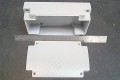
Unit Die Tooling in 2023
Kinetic Die Casting also makes Die Casting Unit Die Tooling.
Unit die tooling is usually larger than die cast tooling inserts and usually smaller than a complete mold. Unit die tooling uses less steel than a complete mold, but more steel than a die casting insert. Unit die tooling requires a master unit holder that sits in the die casting machine. Kinetic Die Casting has “master unit holders” in several diverse sizes to accommodate different sized unit dies.
Unit dies will set into a die casting machine faster and more easily than any other form of tooling. Die casting part size and weight are the biggest boundaries to whether a unit die tool is appropriate for your die cast part.
If you have unit die tooling, deliver it to us because we can manufacture aluminum die cast parts with your unit die tooling. Kinetic Die Casting has master holders in many sizes.
For more information, contact our web site and ask about Die Casting Unit Die Tooling.
To get a price for aluminum die casting parts or die casting tooling, call toll free 800-524-8083 and ask for sales. Or email us at sales@kineticdc.com for a fast response on a price quote.

Kinetic Die Casting makes great quality aluminum, and Zinc Die Casting If looking for a job or would like a quote please visit our website:Kinetic Die Casting Company
“The Parts We Make Today, We Ship Today”
Kinetic Die Casting Company. Inc.
6918 Beck Avenue, North Hollywood,
California 91605, United States of America
E-mail sales@kineticdc.com
USA Toll Free: (800) 524-8083 Local: (818) 982-9200
To get prices for Die Casting Tooling Molds or Parts:
RFQ Die Casting Tooling Part Prices
Kinetic Die Casting Company makes:
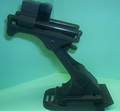
Methods for making Aluminum Heat Sinks Die Castings
Methods for making Aluminum Heat Sinks Die Castings. What are heat sinks? They are usually fastened to electronic devices like those with integrated circuits to release heat when it is working. With that said, heat sinks need to have a wide surface area which will determine their capability to dissipate the heat.
Contact Kinetic Die Casting Company to get a price for aluminum die casting parts or die casting tooling, call toll free 800-524-8083 and ask for sales. Or email us at sales@kineticdc.com for a fast response on a price quote.
Kinetic Die Casting manufactures aluminum die castings creating aluminum die casting boxes, aluminum handle hardware, and aerospace die casting.
If you would like to get a quote, please visit our website: Kinetic Die Casting Company
Sponsored Listings: