This was an exciting week at Kinetic Die Casting Company. We were notified that two customers that they were sending us die casting tools. One tool is a 12 x 15 unit tool that makes an aircraft part and the …
Continue reading
Tag Archives: #diecasting
Die Casting Driving Innovation
Die Casting Revolutionizes Car Parts Manufacturing, where performance, efficiency, and safety are paramount, the quality and precision of every component can make all the difference. Enter die casting, a manufacturing process that has revolutionized the production of car parts, offering unmatched precision, versatility, and efficiency. From engine components to structural elements, transmission housings to suspension components, die casting plays a pivotal role in shaping the future of automotive engineering. Let’s explore how die casting has transformed the manufacturing landscape of car parts and its profound impact on the automotive industry.
Strength and Lightweight Design. In the pursuit of fuel efficiency and performance, automotive engineers are constantly seeking ways to reduce vehicle weight without compromising strength and durability. Die casting provides an ideal solution, allowing manufacturers to produce lightweight parts with exceptional structural integrity. Aluminum and magnesium alloys, commonly used in die casting, offer a winning combination of strength and weight savings, making them well-suited for automotive applications. By leveraging die casting techniques, car manufacturers can design and fabricate components that enhance fuel efficiency, increase payload capacity, and improve overall performance.
The engine serves as the heart of any vehicle, relying on a multitude of precision-engineered components to deliver power efficiently and reliably. From cylinder heads and engine blocks to intake manifolds and transmission cases, die casting plays a critical role in the production of these vital parts. By utilizing die casting processes, automotive manufacturers can achieve the tight tolerances and intricate geometries required for optimal engine performance. Moreover, die casting enables the production of complex shapes and features that would be difficult or impossible to achieve using traditional machining methods, further enhancing engine efficiency and reliability.
Safety is a top priority in automotive design, and vehicle structures must withstand the forces encountered during normal operation and in the event of a collision. Die casting enables the production of parts with uniform grain structure and minimal porosity, resulting in enhanced mechanical properties and crashworthiness. Whether it’s chassis components, suspension parts, or body reinforcements, die-cast parts contribute to the overall strength and safety of vehicles, ensuring passenger protection and structural integrity.
The transmission and drivetrain systems are critical to the performance and efficiency of vehicles, requiring precision-engineered components to transfer power smoothly and reliably. Die casting is instrumental in the production of transmission housings, differential cases, and gearbox components, providing the strength, dimensional accuracy, and heat dissipation capabilities necessary for optimal performance. By leveraging die casting techniques, automotive manufacturers can achieve the intricate geometries and complex features required for advanced transmission systems, improving overall drivability and fuel efficiency.
As automotive technology continues to evolve, so too does the role of die casting in shaping the future of vehicle manufacturing. Manufacturers and engineers collaborate to push the boundaries of innovation, leveraging advanced materials, design optimization techniques, and cutting-edge manufacturing processes to meet the evolving needs of the automotive industry. From lightweight structural components to high-performance engine parts, die casting remains at the forefront of automotive innovation, driving progress and shaping the next generation of vehicles.
Die casting has revolutionized the manufacturing of car parts, offering automotive manufacturers the precision, efficiency, and reliability required to meet the demanding standards of the industry. From enhancing fuel efficiency to improving vehicle safety, die-cast parts play a vital role in shaping the future of automotive engineering, ensuring that vehicles continue to drive innovation and performance on the road ahead.
Permalink: https://www.kineticdiecasting.com/kdc/die-casting-driving-innovation/
“The Parts We Make Today, We Ship Today”
Kinetic Die Casting Company. Inc.
6918 Beck Avenue, North Hollywood,
California 91605, United States of America
E-mail sales@kineticdc.com
USA Toll Free: (800) 524-8083 Local: (818) 982-9200
To get prices for Die Casting Car Parts:
Quote Car Parts Die Casting Prices
Kinetic Die Casting Company makes:
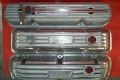 Automotive Die Casting Parts
Die Casting Bracket Hardware
Airplane Die Casting Parts
More Equipment At Kineticdc
Great news for die casting part customers of Kinetic Die Casting Company. We have had great success with our new automated die casting machine this year. We have had less manufacturing production downtime, we have less die casting part porosity, we have had better die casting part product quality and we have had more reliable production die casting part quantities with this new automated die casting machine.
Over the next two months, We will be removing our older Harvil die casting machines and replacing them with automated LK die casting machines. The automated die casting machines will be in place and ready to accept new work by September 2024.
By adding more of the automated LK die casting machines to Kinetic Die Casting Company production, it will give us better die casting part quality and much more die casting part production capacity for our customers.
We will also be open to accept new manufacturing customers needing die casting parts. Contact us anytime to become one of our happy die casting part manufacturing customers.
Our contact information for die casting part quotes: Click for Die Casting Parts
https://www.kineticdiecasting.com/replyform.html
Kinetic Die Casting Company
www.kineticdiecasting.com
6918 Beck Avenue, North Hollywood, CA 91605
818-982-9200 sales@kineticdc.com
Permalink: https://www.kineticdiecasting.com/kdc/more-equipment-at-kineticdc/
Ray Fish Electro Adapter My Obituary
I always found Ray to be very intelligent, and a shrewd business man. He would be 90 years old, if he were alive today. I met Ray Fish of AQ Die Casting/Electro Adaptor on 12/11/03 when my maintenance manager, Victor Ortega, gave me his name telling me that Ray had two Toshiba die casting machines for sale, a 350ton and a 400ton with ladlers prints and manuals. The machines did not work so Ray wanted $5,000 for both die casting machines. AQ Die Casting Electro-Adaptor (https://www.electro-adapter.com/)
In 09/15/12, Ray Fish contacted me to say that he was closing down AQ Die Casting but keeping Electro Adapter. Ray sent me several dies and tooling for several customers. Since then, Ray was on my cookie and almond roca list.
On 11/11/21, I received this email from Ray regarding my Christmas almond roca update. “Thank you for the thought I lost my sweetheart and best friend 2 weeks ago to the virus 69 years of bliss. God Bless her for being there for me as always. My holidays will be memories Be Safe & Be Well, Ray”
In 1969, Ray Fish founded AQ Die Casting/Electro Adapter. Ray was involved with die castings since the 1950s. He took over operations from Barron Die Casting in the late 1960s or early 1970s.
In 1979, ten years later, he moved operations to a 54,000 square foot facility in Chatsworth, California. The Chatsworth facility, completed in 1979, is devoted to the design, development, production and qualification of connector accessories.
Electro Adapter, Inc. manufactures and supplies connector accessories, conduit assemblies, and accessory banding systems for aerospace, military, marine, railroad, and industrial automation markets. It specializes in thin-wall aluminum and zinc castings. The company offers die-castings, bulkhead adapters, extenders, connector savers, protective covers, shorting cans, banding tools, and composites; and accessories for D-sub, micro-D, circular, and ARINC rectangular connectors. It also provides casting, machining, trimming, de-burring, plating, inspection, and metal finishing services for commercial and mil spec applications; and tool and mold design and fabrication, surface treatment, painting, and assembly services. The company is based in Chatsworth, California.
Ray Fredrick Fish Obituary (2022) – FUNERAL HOME – Crawford Lorenzen Mortuary – 8717 Tampa Ave Northridge, California published on Legacy.com by Crawford Lorenzen Mortuary – Northridge on Dec. 22, 2022. (https://www.legacy.com/us/obituaries/name/ray-fish-obituary?id=38449425) Comments left on the funeral home website: January 23, 2023 and September 14, 2023
Permalink: https://www.kineticdiecasting.com/kdc/ray-fish-electro-adapter-my-obituary/
Posted in Blogger, Business, Competitors, Customers, newsletter, Supplier
Tagged #diecasting, Manufacturing
Leave a comment
Kineticdc Closed for July 4th 2024 Holiday
Happy 4th of July 2024 from Kinetic Die Casting Company. We are closed Thursday, July 4th 2024 in celebration of our nations independence. We will be closed as usual on Friday also. We will be returning Monday July 9th for regular hours. God Bless America. We hope that your first half of the year was prosperous and also hope that you year continues to be prosperous.
Independence Day celebrates the signing of our Declaration of Independence on July 4, 1776. The Continental Congress declared that the thirteen American colonies regarded themselves as a new nation, the United States of America, and were no longer part of the British Empire. The Congress actually voted to declare independence two days earlier, on July 2.
Independence Day is commonly associated with fireworks, parades, barbecues, carnivals, fairs, picnics, concerts, baseball games, family reunions, and political speeches and ceremonies, in addition to various other public and private events celebrating the history, government, and traditions of the United States. Independence Day is the National Day of the United States.
As Americans gather to celebrate Independence Day, they also look towards the future with optimism and hope, mindful of the challenges and opportunities that lie ahead. The 4th of July serves as a reminder that the principles enshrined in the Declaration of Independence — equality, justice, and democracy — remain as relevant today as they were over two centuries ago. It is a day to reaffirm our commitment to upholding these ideals and building a brighter, more inclusive future for generations to come.
The 4th of July is more than just a holiday — it is a testament to the enduring spirit of a nation founded on the principles of liberty and self-determination. As Americans gather to celebrate this hallowed day, they do so with a sense of pride in their shared heritage and a determination to uphold the values that define the American experience. From fireworks to family gatherings, the 4th of July is a celebration of freedom, unity, and the boundless possibilities of the American dream.
Kinetic Die Casting Company
6918 Beck Avenue
North Hollywood, California 91605
818-982-9200
sales@kineticdc.com
“The Parts We Make Today, We Ship Today”
Kineticdc makes:
Aluminum Heat Sinks
Automotive Die Casting Parts
Airplane Die Casting Parts
Light Fixture Die Casting Parts
Consumer Products Aluminum Parts
Aerospace Die Casting Parts
Military Die Casting Parts
Die Casting Tooling
#DieCasting, #Kineticdc, #DieCastingCompany, #Manufacturing, #AluminumDieCasting, #Casting
Kinetic Die Casting Company Driving Excellence
When precision meets efficiency in North Hollywood, California, Kinetic Die Casting Company. Inc stands out as a beacon of excellence and innovation. With a legacy spanning decades, Kinetic Die Casting has established itself as a leading provider of high-quality die casting solutions, catering to a diverse array of industries with unmatched precision, reliability, and expertise. Let’s delve into the story of Kinetic Die Casting Company and explore how it has become a trusted partner for businesses seeking superior die casting solutions.
Founded in the heart of Southern California in 1994, Kinetic Die Casting Company has evolved from humble beginnings into a powerhouse of die casting expertise. From its inception, the company’s mission has been clear: to deliver exceptional quality, precision, and value to its customers while fostering a culture of innovation and continuous improvement. With a relentless focus on customer satisfaction and a commitment to excellence in every aspect of its operations, Kinetic Die Casting has earned a reputation as a trusted partner and industry leader in die casting solutions.
At Kinetic Die Casting, versatility is key. The company offers a comprehensive range of die casting services tailored to meet the diverse needs of its clientele. Whether it’s aluminum die casting or zinc die casting, Kinetic Die Casting leverages state-of-the-art technology, advanced materials, and rigorous quality control processes to deliver superior results. From prototype development and tooling design to Low-volume die casting parts production and finishing services, Kinetic Die Casting provides end-to-end solutions that exceed customer expectations and drive success.
What sets Kinetic Die Casting apart is its unwavering commitment to expertise and innovation. With a team of seasoned professionals boasting decades of experience in die casting, metallurgy, and engineering, Kinetic Die Casting possesses the knowledge and skills to tackle even the most complex manufacturing challenges. From design optimization and material selection to process refinement and quality assurance, Kinetic Die Casting leverages its expertise to deliver solutions that meet the highest standards of performance, reliability, and precision.
Quality is the cornerstone of Kinetic Die Casting Company‘s operations. The company adheres to stringent quality control standards at every stage of the manufacturing process, from initial design validation to final inspection and testing. Utilizing continuous improvement initiatives, Kinetic Die Casting ensures that every part meets or exceeds customer specifications, delivering unmatched quality and precision with every project.
At Kinetic Die Casting, customers come first. The company prides itself on its customer-centric approach, fostering long-term partnerships built on trust, transparency, and mutual success. From initial consultation and project planning to ongoing support and collaboration, Kinetic Die Casting Company works closely with its customers to understand their unique needs and objectives, delivering tailored solutions that drive innovation, efficiency, and bottom-line results.
As a forward-thinking company, Kinetic Die Casting is committed to driving innovation and sustainability in the die casting industry. The company invests in research and development initiatives to explore new materials, processes, and technologies that enhance efficiency, reduce environmental impact, and meet the evolving needs of its customers and the broader marketplace. From lightweight alloys and energy-efficient production methods to waste reduction and recycling programs, Kinetic Die Casting is dedicated to shaping a more sustainable future for manufacturing.
Kinetic Die Casting Company stands as a testament to the power of innovation, expertise, and commitment to quality. With a legacy of excellence, a focus on customer satisfaction, and a dedication to driving progress and sustainability, Kinetic Die Casting continues to lead the way in delivering superior die casting solutions that empower businesses to thrive in a competitive global marketplace.
“The Parts We Make Today, We Ship Today”
Kinetic Die Casting Company. Inc.
6918 Beck Avenue, North Hollywood,
California 91605, United States of America
E-mail sales@kineticdc.com
USA Toll Free: (800) 524-8083 Local: (818) 982-9200
To get prices for Die Casting Tooling Molds or Parts:
Die Casting Part Prices
Kinetic Die Casting Company makes:
Die Casting Business
Die Casting Manufacturing
 American National Die Casting Parts
#KineticDieCastingCompany, #Kineticdc, #Diecasting, #DieCastingCompany, #Diecast, #Production, #Manufacturing, #California