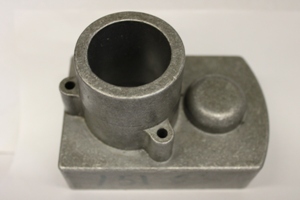
Do you know someone that can use our services? Call us and let us know 818-982-9200. www.kineticdc.com #diecasting #kineticdc #manufacturing @kineticdc Real Steel on Wheels: Kinetic Die Casting Company makes aluminum car parts. Have you ever wondered why certain automobiles …
Continue reading
Category Archives: Die Casting Parts
Zinc and Aluminum Brackets: Strength, Efficiency, and Structural Support
Structural stability is one of the most critical considerations in modern construction, manufacturing, and product design. Whether engineers are designing residential buildings, commercial structures, industrial equipment, or consumer products, brackets play a vital role in providing reliable support and long-term durability. Among the most widely used solutions today are aluminum brackets hardware and zinc brackets, both of which offer exceptional strength, versatility, and cost efficiency when manufactured through die casting.
As architects and engineers continue to seek materials that balance performance with affordability, zinc and aluminum die cast brackets have become essential components across numerous industries.
Die Casting Brackets
Brackets are used to connect, reinforce, or support structural elements. They may be found in building frameworks, shelving systems, machinery housings, electronics enclosures, furniture, transportation equipment, and countless other applications. A well-designed bracket ensures proper load distribution, minimizes stress, and enhances the overall integrity of the structure it supports.
Historically, steel brackets dominated the market. However, advances in metallurgy and die casting technology have positioned aluminum and zinc brackets as superior alternatives in many applications—offering equal or greater strength with reduced weight and manufacturing cost.
The Advantages of Aluminum Brackets
Aluminum brackets are particularly valued for their excellent strength-to-weight ratio. Despite being significantly lighter than steel, aluminum can be engineered to meet demanding structural requirements. Through the die casting process, strengthening ribs, gussets, and radii can be integrated directly into the bracket design, dramatically increasing load-bearing capacity.
Another key advantage of aluminum is corrosion resistance. Aluminum naturally forms an oxide layer that protects it from rust, making it ideal for both indoor and outdoor environments. This makes aluminum brackets well suited for construction, architectural applications, and exposed installations where longevity is essential.
From a manufacturing standpoint, aluminum is highly compatible with die casting. Molten aluminum can be injected into precision molds to create complex, net-shape parts that require little to no secondary machining. Features such as mounting holes, channels, and contours can be designed directly into the mold, eliminating additional labor and reducing overall production costs.
Zinc Brackets: Precision and Durability
Zinc die cast brackets offer their own unique set of advantages, particularly in applications requiring high precision and excellent surface finish. Zinc alloys flow extremely well during the die casting process, allowing for tighter tolerances and finer detail than many other metals.
This makes zinc brackets ideal for applications where dimensional accuracy is critical, such as electronics housings, mechanical assemblies, and consumer products. Zinc also offers superior impact resistance and excellent strength in thinner wall sections, allowing designers to reduce material usage without compromising performance.
Additionally, zinc die castings typically require minimal finishing and accept a wide range of surface treatments, including plating, powder coating, and painting. This makes zinc brackets especially attractive for visible or decorative applications where aesthetics matter alongside functionality.
Cost Efficiency Through Die Casting
One of the most compelling reasons zinc and aluminum brackets are so widely used is cost efficiency. Die casting enables high-volume production at a lower per-unit cost compared to traditional machining or fabrication methods.
The die casting process involves injecting molten metal—either aluminum or zinc—into hardened steel molds designed with precise cavities. Because the molds can be reused thousands or even millions of times, the upfront tooling investment is quickly offset in mass production. Complex geometries that would be expensive or impossible to machine can be produced consistently and efficiently.
By incorporating features such as holes, ribs, and mounting points directly into the die, manufacturers eliminate secondary operations like drilling, welding, or assembly. This not only reduces production time but also minimizes potential failure points over the life of the part.
Strength Without Excess Weight
Weight reduction is a major design priority in many industries, including construction, aerospace, automotive, and transportation. Aluminum brackets, in particular, provide excellent load-bearing capability while significantly reducing overall system weight. This improves fuel efficiency, lowers transportation costs, and simplifies installation.
The aircraft industry is a prime example of this advantage. Die cast aluminum brackets are commonly used in aircraft interiors and structural components where strength, safety, and weight savings are all essential. For instance, Boeing aircraft utilize die cast aluminum brackets in seat-back tray tables, providing sturdy, reliable support for passengers’ meals and electronic devices without adding unnecessary weight.
Design Flexibility and Reliability
Unlike fabricated brackets that rely on welded or bolted assemblies, die cast zinc and aluminum brackets are produced as single, solid components. This eliminates weak points caused by joints or welds that can degrade over time due to vibration, fatigue, or environmental exposure.
Die casting allows engineers to design brackets that are optimized for real-world load conditions. Reinforcements can be added exactly where needed, ensuring consistent performance and long-term reliability. This design freedom is especially valuable in applications requiring customized or multi-purpose brackets, such as servo brackets, angle brackets, and mounting hardware.
- Applications Across Industries
- Zinc and aluminum die cast brackets are used across a broad range of industries, including:
- Residential and commercial construction
- Industrial machinery and automation
- Aerospace and transportation
- Electronics and electrical enclosures
- Furniture and fixtures
- Consumer and commercial appliances
Their versatility, durability, and affordability make them indispensable components in modern manufacturing and design.
Kinetic Die Casting Company: Your Partner in Bracket Manufacturing
Kinetic Die Casting Company specializes in producing high-quality zinc and aluminum die cast components, including die casting aluminum brackets. Kinetic manufactures these parts every day and ships thousands of aluminum die castings each week to customers across multiple industries.
With advanced tooling, strict quality control, and a commitment to precision, Kinetic Die Casting delivers brackets that meet exact specifications and demanding performance standards.
If you are interested in learning more about zinc or aluminum brackets, or if you would like to request die casting prices, contact Kinetic Die Casting Company today.
Zinc and Aluminum Brackets: Strength, Efficiency, and Structural Support
|
Kinetic Die Casting Company, Inc. 6918 Beck Avenue, North Hollywood, California USA 91605 E-mail sales@kineticdiecasting.com (818) 982-9200 California Die Castings – Die Casting Photos – Technical FAQ – Die Casting Prices – Kinetic Die Casting Company What is Die Casting ? – Why Use Die Casting – Kinetic Abilities – Die Casting Offshore ? – Sand casting prices and die castings – Die Casting Tooling – Kinetic Newsletter |
If you no longer wish to receive these emails, you may unsubscribe here.
Why Choose Aluminum Die Casting Over Aluminum Sand Casting for Automotive Parts
Aluminum has long been a material of choice for the automotive industry due to its lightweight, corrosion-resistant properties and excellent thermal and mechanical performance. Automotive manufacturers rely on aluminum for engine components, transmission housings, suspension parts, heat sinks, and numerous other applications where weight reduction, strength, and precision are critical. Two common methods for producing aluminum components are die casting and sand casting. While both processes have their uses, aluminum die casting offers several advantages over sand casting, particularly for automotive parts that demand high volume, tight tolerances, and consistent quality.
This article explores the key reasons why automotive engineers and manufacturers often choose aluminum die casting over sand casting, examining material properties, production efficiency, precision, surface finish, and long-term performance.
Die Casting vs Sandcasting

Die Casting Part Prices
1. Precision and Dimensional Accuracy
One of the most significant advantages of aluminum die casting over sand casting is precision. In die casting, molten aluminum is injected under high pressure into steel molds, allowing the creation of highly detailed components with tight dimensional tolerances. Typical tolerances for aluminum die cast parts range from ±0.005 inches to ±0.02 inches, depending on part size and complexity.
In contrast, sand casting relies on a mold made from compacted sand, which can shift slightly during pouring and cooling. As a result, sand-cast parts typically exhibit greater variability in dimensions and require additional machining to achieve the necessary tolerances. For automotive parts such as transmission housings, engine blocks, and structural brackets, precise dimensions are essential for assembly, performance, and reliability. Die casting minimizes post-machining requirements and ensures consistent part quality across thousands of units.
2. High Production Rates
Automotive manufacturing is a high-volume industry, and production speed is a critical factor. Aluminum die casting excels in this area because the process is designed for rapid, repeatable production. Once the die is fabricated, parts can be produced at rates of hundreds to thousands per day, depending on size and complexity.
Sand casting, on the other hand, is slower because each sand mold is typically single-use or limited-use. Creating new molds for every casting adds time, labor, and cost. For automotive manufacturers needing thousands of parts per week, die casting offers a clear advantage in meeting production schedules and minimizing lead times.
3. Superior Surface Finish
Aluminum die casting provides a smoother and more uniform surface finish than sand casting. Die cast parts emerge from the mold with a relatively smooth surface that often requires minimal post-processing. This smooth finish is advantageous for automotive parts that will be painted, coated, or assembled with other components. It also reduces friction and wear in moving parts and enhances aesthetic appeal for visible components.
In contrast, sand casting typically produces a rougher surface that often requires extensive machining, grinding, or finishing. The extra processing increases production costs and can add variability between parts, making die casting the preferred option for components where surface finish and precision matter.
4. Strength and Structural Integrity
Aluminum die cast parts generally offer superior strength and structural integrity compared to sand-cast components. The high-pressure injection in die casting results in densely packed metal with fewer porosities. This dense structure improves mechanical properties such as tensile strength, yield strength, and fatigue resistance.
Sand casting, particularly with thin-walled or complex components, can produce parts with higher porosity, shrinkage cavities, and uneven grain structures. These imperfections can reduce the strength and reliability of sand-cast automotive parts, particularly in high-stress applications like engine components or suspension brackets.
Additionally, die casting allows engineers to design integrated features such as ribs, bosses, and mounting holes directly into the part, reducing the need for welding or assembly. This capability enhances part strength and reduces the risk of weak points that can fail under load.
5. Design Flexibility
While both sand casting and die casting offer design flexibility, die casting excels in producing complex geometries with thin walls and intricate details. Features such as mounting flanges, cooling fins, and internal cavities can be incorporated directly into the die. This is particularly important in automotive applications where lightweight components with complex shapes are required to optimize performance and reduce vehicle weight.
Sand casting can produce complex parts as well, but thin sections and intricate features are more challenging due to limitations in mold strength and metal flow. Designers often need to increase wall thickness or simplify features in sand-cast parts, which can result in heavier, less efficient components.
6. Consistency and Repeatability
Automotive production demands consistency across thousands or even millions of components. Aluminum die casting provides exceptional repeatability because the steel dies used in the process maintain their shape and dimensions over tens of thousands of cycles. Each part produced is virtually identical to the last, ensuring uniform performance and fit during assembly.
Sand casting, however, is more variable. Slight differences in sand compaction, mold setup, and cooling rates can lead to dimensional inconsistencies between parts. For critical automotive components where precision assembly is required, die casting reduces scrap rates, improves quality, and minimizes inspection time.
7. Reduced Machining Requirements
Because die cast parts are produced with high precision and integrated features, post-casting machining is often minimal. For automotive manufacturers, this means lower labor costs, reduced tool wear, and faster production cycles.
Sand-cast parts often require more extensive machining to achieve final dimensions, add mounting features, or smooth rough surfaces. This additional processing increases production time and cost, making die casting a more efficient choice for high-volume automotive applications.
8. Weight Reduction
Light-weighting is a critical goal in modern automotive design to improve fuel efficiency and reduce emissions. Aluminum die casting allows for precise control of wall thickness and design optimization to remove excess material without sacrificing strength. This capability enables engineers to create lightweight components such as engine covers, transmission housings, and suspension brackets.
Sand casting typically requires thicker walls to ensure structural integrity, which can result in heavier parts. In applications where every pound matters, die casting offers a significant advantage.
9. Part Cost Considerations
While the initial cost of die casting tooling is higher than sand casting molds, die casting becomes more cost-effective for medium- to high-volume production. The ability to produce thousands of parts per mold, combined with reduced machining, lower scrap rates, and faster production cycles, offsets the upfront tooling cost.
Sand casting is often more economical for very low-volume or prototype parts, but for automotive production runs, die casting offers better overall cost efficiency and scalability.
10. Corrosion Resistance and Surface Treatments
Die cast aluminum parts also lend themselves well to corrosion-resistant coatings and surface treatments. Anodizing, powder coating, or painting can be applied directly to die cast parts, enhancing durability and appearance. While sand-cast aluminum parts can also be coated, the rougher surface and potential porosity may require additional preparation, increasing production time and cost.
11. Sustainability and Waste Reduction
Aluminum die casting produces less waste than sand casting. Excess material from die casting is often reusable, whereas sand casting generates spent molds that must be disposed of or recycled. For environmentally conscious automotive manufacturers, die casting provides a more sustainable manufacturing solution while still meeting high-performance requirements.
12. Ideal Automotive Applications for Die Casting
Die casting is particularly advantageous for the following automotive applications:
• Engine components: Engine blocks, cylinder heads, and housings benefit from high strength, thermal conductivity, and precision.
• Transmission and drivetrain parts: Die cast housings provide dimensional accuracy and structural integrity.
• Suspension and structural brackets: Lightweight, high-strength components reduce vehicle weight and improve performance.
• Electronics and housings: Die cast heat sinks and housings allow for complex designs with excellent thermal management.
• Interior and exterior hardware: Handles, brackets, and decorative components achieve excellent surface finish and durability.
While aluminum sand casting remains a viable option for low-volume or prototype parts, aluminum die casting offers clear advantages for automotive components. Its precision, high production rates, superior surface finish, strength, repeatability, and design flexibility make it the preferred choice for high-performance, high-volume automotive applications.
Die casting reduces the need for post-processing, minimizes waste, and enables lightweight, structurally optimized components, all of which are critical in today’s automotive industry where efficiency, safety, and performance are paramount.
By choosing aluminum die casting over sand casting, automotive manufacturers can achieve higher-quality parts, lower overall production costs, and faster time-to-market—all while supporting consistency, durability, and innovative design. For engineers and decision-makers, die casting represents a smart, forward-thinking choice for producing reliable aluminum automotive parts that meet the demands of modern vehicles.
|
Kinetic Die Casting Company, Inc. 6918 Beck Avenue, North Hollywood, California USA 91605 E-mail sales@kineticdiecasting.com (818) 982-9200 California Die Castings – Die Casting Photos – Technical FAQ – Die Casting Prices – Kinetic Die Casting Company What is Die Casting ? – Why Use Die Casting – Kinetic Abilities – Die Casting Offshore ? – Sand casting prices and die castings – Die Casting Tooling – Kinetic Newsletter |
If you no longer wish to receive these emails, you may unsubscribe here.
Kinetic Die Casting Company: Your Trusted Aluminum Die Casting Supplier in the USA
Die casting production, precision, speed, and American-made quality matter, Kinetic Die Casting Company stands out as a premier aluminum die casting supplier serving industries that demand excellence. Located at 6918 Beck Avenue, North Hollywood, California, USA, Kinetic has been delivering high-pressure aluminum and zinc die castings since 1994—earning a reputation for producing stronger-than-steel parts, shipped the same day they’re made.
With the motto “The Parts We Make Today, We Ship Today”, Kinetic combines advanced technology, in-house engineering, and a relentless focus on customer success to support aerospace, military, automotive, lighting, and electronics manufacturers across the United States.
Aluminum Die Casting Supplier
Why Kinetic Die Casting Company Excels as an Aluminum Die Casting Company Supplier
High-Pressure Die Casting Expertise – Kinetic specializes in high-pressure aluminum die casting, injecting molten A380, A360, A383, and other alloys into precision steel dies at over 10,000 PSI.
-
This process delivers:
- Thin walls (as low as 0.040″)
- Tight tolerances (±0.002″ per inch)
- Complex geometries with integrated features
- Superior surface finish ready for plating or powder coating
Unlike sand or gravity casting, high-pressure die casting produces pressure-tight, heat-resistant parts ideal for hydraulic housings, transmission cases, and LED heat sinks.
USA Die Casting Supplier

Die Casting Part Prices
Link: Kinetic Die Casting Company: Your Trusted Aluminum Die Casting Supplier in the USA
|
Kinetic Die Casting Company, Inc. 6918 Beck Avenue, North Hollywood, California USA 91605 E-mail sales@kineticdiecasting.com (818) 982-9200 California Die Castings – Die Casting Photos – Technical FAQ – Die Casting Prices – Kinetic Die Casting Company What is Die Casting ? – Why Use Die Casting – Kinetic Abilities – Die Casting Offshore ? – Sand casting prices and die castings – Die Casting Tooling – Kinetic Newsletter |
If you no longer wish to receive these emails, you may unsubscribe here.
ITAR Compliant Die Casting Company
Kinetic Die Casting Company (KDC) stands out as an ITAR-compliant die casting company. A very interesting thing happened, we received a RFQ request for die casting part price quote from a fastener company because they searched ChatGBT for an “ITAR Compliant Die Casting Company”. We are based in North Hollywood, California USA. Established in 1994, KDC has built a reputation not only for high-quality aluminum die castings but also for its unwavering commitment to U.S. regulatory standards—including full compliance with the International Traffic in Arms Regulations (ITAR).
ITAR Compliant Die Casting
Kinetic Die Casting Company proudly displays its ITAR compliance alongside other key certifications:
– CAGE/NCAGE Code: 4ZQV3 – Officially registered with the U.S. Department of Defense.
– AS9100C Compliant – Aerospace and quality management standards.
– SBA Small Disadvantaged Business – Veteran-owned.
– ITAR-compliant die casting company
Kinetic Die Casting is located just minutes from major freeways and the Bob Hope Airport in Burbank, KDC operates entirely within the United States at 6918 Beck Avenue, North Hollywood, CA 91605. This domestic footprint ensures that all ITAR-controlled projects remain under U.S. jurisdiction, eliminating risks associated with offshore manufacturing.
ITAR Die Casting Parts
|
Kinetic Die Casting Company, Inc. 6918 Beck Avenue, North Hollywood, California USA 91605 E-mail sales@kineticdiecasting.com (818) 982-9200 California Die Castings – Die Casting Photos – Technical FAQ – Die Casting Prices – Kinetic Die Casting Company What is Die Casting ? – Why Use Die Casting – Kinetic Abilities – Die Casting Offshore ? – Sand casting prices and die castings – Die Casting Tooling – Kinetic Newsletter |
If you no longer wish to receive these emails, you may unsubscribe here.
Kinetic Die Casting A USA Die Casting Supplier
Choosing the right die casting company supplier for metal components can make all the difference. For companies across industries—automotive, electronics, military, industrial equipment, and consumer products—Kinetic Die Casting Company has emerged as a trusted and capable U.S. die casting supplier. Based in Los Angeles, California, Kinetic Die Casting combines advanced manufacturing capabilities, American-based production, and a customer-centric approach to deliver high-quality aluminum die cast parts that meet demanding specifications and tight delivery schedules.
USA Die Casting Supplier

Die Casting Part Prices
Before diving into what makes Kinetic Die Casting Company distinct, it’s important to understand the broader manufacturing context. Die casting is a metal casting process in which molten aluminum is injected into high-precision steel dies under high pressure. The result is accurate, repeatable, and often near-net-shape parts that require minimal secondary machining.
While die casting is performed globally, sourcing parts domestically—especially for critical industries—has significant advantages:
Shorter lead times compared with overseas production.
Reduced transportation costs and logistics complexity.
Greater control over quality and production responsiveness.
Closer collaboration with engineers and design teams.
Support for U.S. jobs and manufacturing infrastructure.
Kinetic Die Casting Company leverages these advantages to deliver value that extends far beyond the aluminum parts themselves.
Precision USA Aluminum Die Casting
At the heart of Kinetic Die Casting’s offerings is precision aluminum die casting. The company specializes in producing complex, durable components with tight tolerances. Aluminum’s favorable strength-to-weight ratio, corrosion resistance, and thermal conductivity make it an ideal material for a wide array of applications—from structural parts to housings, brackets, and heat-dissipating components.
Kinetic Die Casting’s production process begins with high-quality aluminum alloys selected for performance and manufacturability. Once the tooling is complete, parts are produced rapidly and consistently using state-of-the-art die casting equipment.
Rapid Turnaround and Flexible Quantities
One of the most significant advantages of working with Kinetic Die Casting Company is responsiveness. Automotive development cycles, defense programs, and industrial equipment launches often operate under compressed timelines. Kinetic Die Casting can produce parts and ship in as little as a few weeks from receiving a purchase order—substantially faster than many offshore suppliers.
Furthermore, the company supports flexible production volumes. Whether a customer needs a few hundred parts for a prototype run or thousands for full production, Kinetic Die Casting can scale accordingly without compromising quality or delivery commitments.
Secondary Operations and Finished Parts
Die cast components often require post-cast processing to meet final part specifications. Kinetic Die Casting offers a suite of secondary operations, including:
Trimming to remove excess material.
Impregnation to seal internal porosity for pressure retention or fluid-handling parts.
Machining for precision features and tight tolerances.
Surface treatments such as Chem Film Alodine, anodizing, or coating preparation.
Final inspection against engineering drawings and quality standards.
These capabilities enable the company to deliver parts that are production-ready, reducing the burden on customers’ in-house manufacturing resources.
Quality Assurance and Documentation
Quality is paramount at Kinetic Die Casting. Every production run undergoes inspection using calibrated measurement tools and processes designed to ensure parts conform to specifications. For customers requiring traceability and compliance documentation, the company provides:
Material certifications confirming alloy composition and quality.
Certificates of U.S. manufacture for domestic sourcing verification.
Inspection reports validating dimensional accuracy and part integrity.
This documentation is critical for regulated industries, including defense, aerospace, and automotive programs with stringent quality requirements.
Applications Across Industries
Kinetic Die Casting Company serves a wide range of markets that rely on aluminum die cast parts for performance, durability, and cost efficiency.
Automotive Die Castings
In the automotive sector, aluminum die casting plays a key role in reducing vehicle weight for improved fuel economy and performance. Engine components, transmission housings, brackets, and structural parts are among the many applications where precise, lightweight aluminum parts are essential. Kinetic Die Casting’s ability to balance quality and volume makes it an attractive partner for automotive OEMs and Tier-1 suppliers.
Electronics and Thermal Management
Aluminum die cast heat sinks, housings, and thermal management components are widely used in electronics, power supplies, and LED lighting. Thermal conductivity, dimensional stability, and integrated mounting features make die cast parts ideal for these applications. Kinetic Die Casting produces parts that facilitate efficient cooling and reliable performance in demanding environments.
Military and Defense
Defense and military programs often require domestically sourced parts with documented material traceability. Kinetic Die Casting supplies aluminum components used in a variety of military applications. With the capability to produce low-quantity runs—even under 100 parts—and deliver certified U.S. manufacture, the company supports defense contractors and government programs where reliability and sourcing compliance are essential.
Industrial Equipment and Hardware
Industrial machinery, material handling equipment, commercial hardware, and even consumer products benefit from precision aluminum die cast parts. Handles, brackets, housings, and structural components produced by Kinetic Die Casting help manufacturers achieve durable, consistent results that hold up under repeated use.
A differentiator for Kinetic Die Casting Company is its collaborative approach. Rather than simply receiving drawings and producing parts, the company works with customers early in the design process to optimize parts for manufacturability, cost, and performance. This includes:
Reviewing part geometry for optimized wall thickness.
Suggesting design changes to reduce porosity or improve strength.
Recommending material selections based on application environments.
Offering tooling design insights to extend die life and reduce cycle time.
Early engagement often leads to improved part performance, reduced production costs, and fewer revisions during development.
Advantages of American Sourcing
Choosing a U.S. die casting supplier like Kinetic Die Casting has strategic advantages that extend beyond manufacturing:
1. Supply Chain Reliability
Global supply chain disruption has highlighted the benefits of domestic manufacturing. Sourcing locally reduces dependence on ocean freight, long lead times, and logistical uncertainty, providing customers with stable, predictable delivery schedules.
2. Clear Communication
Proximity and shared business practices facilitate direct communication between buyers, engineers, and production teams. Time zone alignment and immediate accessibility help accelerate problem solving and project timelines.
3. Economic and Regulatory Benefits
Domestic sourcing supports American jobs and aligns with Buy America, FAR, and similar procurement guidelines often required for government and infrastructure contracts. Certifications provided by Kinetic Die Casting support compliance with these regulations.
4. Faster Turnarounds
With tooling, production, inspection, and shipping located within the same region, Kinetic Die Casting delivers parts rapidly—often within weeks—as opposed to months from offshore locations.
Commitment to Continuous Improvement
Manufacturing technology continues to evolve, and Kinetic Die Casting Company embraces innovation to enhance quality, productivity, and customer value. Whether through updated die casting machinery, quality control systems, or advanced metallurgy practices, the company invests in capabilities that strengthen outcomes for customers.
Continuous improvement also includes workforce development—ensuring that technicians, engineers, and production staff possess the training and expertise needed to tackle modern manufacturing challenges. With this foundation, the company can adapt to emerging industry requirements and support customers’ long-term goals.
Customer Experience and Long-Term Partnerships
At the core of Kinetic Die Casting’s success is a focus on customer experience. The company strives not just to fulfill orders but to build long-term partnerships based on trust, transparency, and performance. By aligning production schedules with customer timelines, providing clear documentation, and offering design support, Kinetic Die Casting becomes an extension of its customers’ operations rather than just a supplier.
This partnership approach pays dividends over time. Customers benefit from consistent quality, predictable costs, improved designs, and a supplier that understands their business needs.
Kinetic Die Casting Company stands out as a reliable, responsive, and capable aluminum die casting supplier in the United States. With precision die casting capabilities, a full suite of secondary operations, and a commitment to quality and customer collaboration, the company meets the needs of automotive, defense, electronics, industrial, and consumer markets.
By keeping production domestic, offering flexible production volumes, and emphasizing early collaboration in part design, Kinetic Die Casting provides customers with both technical excellence and strategic advantages. For companies seeking a U.S. partner capable of delivering high-performance aluminum die cast parts with speed and consistency, Kinetic Die Casting Company represents a strong choice that aligns quality with dependable service and long-term value.
|
Kinetic Die Casting Company, Inc. 6918 Beck Avenue, North Hollywood, California USA 91605 E-mail sales@kineticdiecasting.com (818) 982-9200 California Die Castings – Die Casting Photos – Technical FAQ – Die Casting Prices – Kinetic Die Casting Company What is Die Casting ? – Why Use Die Casting – Kinetic Abilities – Die Casting Offshore ? – Sand casting prices and die castings – Die Casting Tooling – Kinetic Newsletter |
If you no longer wish to receive these emails, you may unsubscribe here.