Kinetic Die Casting Company 6918 Beck Avenue North Hollywood, California USA 91605 www.kineticdc.com Phone Number: 818-982-9200 Toll Free: 800-524-8083 Fax Number: 818-982-0877 Email: sales@kineticdc.com The Die Casting Parts We Make Today, We Ship Today. #kineticdc @kineticdiecasting
Happy Saint Patricks Day 2026 from Kinetic Die Casting Company
Saint Patrick’s Day in the USA is a fun day for many people. As kids, we would pinch our friends that were not wearing green. As adults, some people learned to enjoy green color beer.

The History of Saint Patrick’s Day – Every year on March 17, people around the world celebrate Saint Patrick’s Day with parades, music, and plenty of green. While today the holiday is often associated with lively festivities, its origins are rooted in history, faith, and Irish culture that stretch back more than 1,500 years.
Saint Patrick, the patron saint of Ireland, was not actually Irish by birth. He is believed to have been born in Roman Britain in the late 4th century. As a teenager, Patrick was captured by Irish raiders and taken to Ireland, where he was enslaved and forced to work as a shepherd. During this time, he turned strongly to his Christian faith, which he later credited with giving him strength and hope. After several years, Patrick escaped and returned home, but his experiences in Ireland would shape the rest of his life.
According to tradition, Patrick later became a priest and then a bishop. He felt called to return to Ireland as a missionary, where he spent many years teaching Christianity. Legends say he traveled widely, preaching, baptizing converts, and establishing churches. One of the most famous stories associated with Saint Patrick is that he used the three-leafed shamrock to explain the Christian concept of the Holy Trinity. While historians debate how much of this story is fact, the shamrock became a lasting symbol of both Saint Patrick and Ireland.
Saint Patrick is also famously linked to the legend of driving snakes out of Ireland. In reality, Ireland never had native snakes, and scholars believe this tale is symbolic, representing the spread of Christianity and the decline of older belief systems. Patrick is thought to have died on March 17 around the year 461, and that date later became a feast day in his honor.
For many centuries, Saint Patrick’s Day was primarily a religious observance in Ireland. People attended church services and reflected on Patrick’s life and legacy. During this time, Irish laws even required pubs to close on March 17, emphasizing the holiday’s solemn nature. The color most associated with Saint Patrick was originally blue, not green, which became popular much later.
The modern celebrations we recognize today developed largely outside Ireland. Irish immigrants, especially those who settled in the United States during the 18th and 19th centuries, used Saint Patrick’s Day as a way to celebrate their heritage and maintain a sense of community. The first recorded Saint Patrick’s Day parade took place in New York City in 1762, long before Ireland hosted its own large parades.
Over time, Saint Patrick’s Day evolved into a global celebration of Irish culture. Green clothing, festive parades, traditional music, and cultural symbols like leprechauns became widely recognized. In recent decades, Ireland itself has embraced these larger celebrations, hosting festivals that attract visitors from around the world.
Today, Saint Patrick’s Day is both a tribute to a historical figure and a celebration of Irish identity. Whether marked through quiet reflection or joyful festivities, the holiday continues to connect people to Ireland’s rich history and enduring cultural influence.
|
Kinetic Die Casting Company, Inc. 6918 Beck Avenue, North Hollywood, California USA 91605 E-mail sales@kineticdiecasting.com (818) 982-9200 California Die Castings – Die Casting Photos – Technical FAQ – Die Casting Prices – Kinetic Die Casting Company What is Die Casting ? – Why Use Die Casting – Kinetic Abilities – Die Casting Offshore ? – Sand casting prices and die castings – Die Casting Tooling – Kinetic Newsletter |
If you no longer wish to receive these emails, you may unsubscribe here.
Pace Industries Die Casting Closure
Bad news for our American manufacturing industry, die casting plant shut down announced by Pace Industries. Founded in 1970 in Arkansas, Pace Industries has grown into one of North America’s largest full-service die-casting manufacturers. The company produces precision metal components used in a variety of industries, including automotive, aerospace, and consumer products.
In recent years, the company relocated its global headquarters to the Detroit area to be closer to major automotive customers. In 2021, Pace Industries officially moved its headquarters to Novi, Michigan.
On February 24, 2026, Pace Industries, a die casting corporation, submitted a notice under the Worker Adjustment and Retraining Notification Act (WARN Act), a federal law that requires certain employers to provide at least 60 days’ advance notice before conducting mass layoffs or plant closures. The law is intended to give employees and local communities time to prepare for job losses and to seek retraining or new employment opportunities.
Pace Industries is located in Muskegon, Michigan is a major manufacturing employer in Michigan and are preparing to close two facilities, a move that will result in the permanent layoff of up to 145 workers.
Pace Industries, a die-casting manufacturer specializing in aluminum, zinc, and magnesium components, announced plans to shut down its plants located at 2121 Latimer Drive and 2350 Black Creek Road. According to a notice filed with the Michigan Department of Labor and Economic Opportunity, the closures and layoffs are expected to take effect on April 25, 2026.
The company cited ongoing restructuring efforts as the reason for the decision. Officials are reviewing whether the required notice period was properly met in this case. If the company did not provide the full 60-day notification period before implementing the layoffs, it could potentially face claims of noncompliance with the WARN Act.
The layoffs will affect a wide range of manufacturing and management roles. Positions scheduled to be eliminated include general operators, die-cast operators, melt operators, painters, quality technicians, and production managers. The job losses represent a significant reduction in the company’s workforce in Muskegon.
Despite the closures, Pace Industries will continue operating one remaining facility in the city at 2281 Port City Boulevard, according to information listed on the company’s website.
Pace Industries first expanded into the West Michigan market in 2015 when it acquired the Port City Group, a Muskegon-based die-casting manufacturer. At the time, the acquisition was seen as an opportunity to expand production capacity and strengthen the company’s presence in the region.
Following the acquisition, Port City Group CEO John Essex expressed optimism about the merger, saying the partnership would allow the company to access Pace Industries’ broader resources while maintaining strong local operations.
The upcoming closures in Muskegon are part of a broader restructuring strategy within the company. Similar workforce reductions have been announced at other facilities, including a planned shutdown of a plant in Harrison, Michigan, which is expected to eliminate an additional 178 jobs.
Permalink: https://www.kineticdiecasting.com/kdc/pace-industries-die-casting-closure/

Kinetic Die Casting
If you are a manufacturing company that needs aluminum die casting parts or zinc die casting parts, contact us at Kinetic Die Casting Company 818-982-9200 for a proposal on your parts. Send us your request for quote files to sales@kineticdc.com or
You can also use our online die casting part proposal form:
https://www.kineticdiecasting.com/replyform.html
Posted in Blogger, Business, Competitors, Die Casting Parts, newsletter, Supplier
Tagged #competitor, #diecasting, #DieCastingCompany, American Business, Business
Leave a comment
Kinetic Die Casting Compares Die Castings To Other Production Processes
Die casting – A manufacturing process in which molten metal is injected, under pressure, into a hardened steel die or also called mold. Dies are often water-cooled. Dies are then opened, and the die castings are ejected (many times thousands of parts each day, sometimes only a few hundred). Once the tooling is paid for, die casting is a very inexpensive aluminum part manufacturing process. We can make over 2000 die casting parts a day.
Compare Die Casting Process

Die Casting Part Prices
Forgings – Compared with forgings, die casting can be more complex in shape and have shapes not forgeable, can have thinner sections, be held to closer dimensions, and have coring not feasible in forging.
Plastic Injection moldings – Compared with plastic injection moldings, die casting are stronger, stiffer, more stable dimensionally, more heat resistant, and are far superior to plastics on a properties/ $ cost basis. They help prevent radio frequency and electromagnetic emissions. For chrome plating, die castings are much superior to plastics. Die castings have a high degree permanence under load compared to plastics, are completely resistant to ultra-violet rays, weathering, and stress-cracking in the presence of various reagents. Manufacturing cycles for producing die castings are much faster than for injection moldings.
Extrusions – Compared to extrusions, die casting can be produced faster and more net shape. Features and depressions on the sides, tops and bottoms can be created in one operation. There is less waste using die casting than extrusion. Holes can be cast in place to save additional machining cost.
Stampings – Compared with steel stampings, one die casting can often replace several parts. Die casting frequently require fewer assembly operations, can be held within closer dimensional limits, can have almost any desired variation in section thickness, involve less waste in scrap, and are producible in more complex shapes. Die castings can be made in many shapes not producible in stamped form.
Screw Machine Parts – Compared with screw machine products, die castings are produced more rapidly, involve much less waste in scrap, can be made into shapes that are difficult or impossible to produce from bar or tubular stock, and may require fewer operations.
Sand castings – Compared with sand castings, die castings require much less machining, can be made with thinner walls, can have all or nearly all holes cored to size, can be held within much closer dimensional limits, and are produced more rapidly in dies which make thousands of die castings without replacement. Die castings do not require new cores for each casting, are easily provided with inserts die cast in place, have smoother surfaces and involve much less labor cost per casting.
Permanent mold castings – Compared with permanent mold castings, die castings can be made to closer dimensional limits and with thinner sections and holes can be cored to near net shape. Die castings are produced at higher rates with less manual labor, have smoother surfaces, and usually cost less per die casting.
Die Castings Compared to other Manufacturing Processes
|
Kinetic Die Casting Company, Inc. 6918 Beck Avenue, North Hollywood, California USA 91605 E-mail sales@kineticdiecasting.com (818) 982-9200 California Die Castings – Die Casting Photos – Technical FAQ – Die Casting Prices – Kinetic Die Casting Company What is Die Casting ? – Why Use Die Casting – Kinetic Abilities – Die Casting Offshore ? – Sand casting prices and die castings – Die Casting Tooling – Kinetic Newsletter |
If you no longer wish to receive these emails, you may unsubscribe here.
Posted in Blogger, Die Casting Parts, Diecasting Process, newsletter
Tagged #diecasting, Manufacturing
Leave a comment
Kinetic Die Casting Company: Precision Aluminum Die Casting in Los Angeles, California
Kinetic Die Casting Company is a U.S.-based aluminum die casting manufacturer located in Los Angeles, California. With a strong focus on quality, speed, and American-made production, the company has built a reputation as a reliable supplier of precision aluminum die cast parts for a wide range of industries. By combining experienced craftsmanship with modern manufacturing processes, Kinetic Die Casting supports customers from early product development through full production.
Aluminum die casting is one of the most efficient methods for producing complex metal components in medium to high volumes. Kinetic Die Casting specializes in this process, producing parts with excellent dimensional accuracy, repeatability, and surface finish. Aluminum die casting allows intricate shapes, thin walls, ribs, bosses, and mounting features to be formed directly in the mold, reducing the need for secondary machining or assembly. This near net shape capability helps customers lower total manufacturing costs while maintaining high performance standards.
Los Angeles Die Casting Company
Located in Los Angeles, Kinetic Die Casting is strategically positioned to serve customers throughout California and across the United States. Domestic manufacturing enables faster communication, shorter lead times, and greater flexibility compared to offshore suppliers. The company is known for its ability to respond quickly to customer needs, including fast-turn production schedules and low-quantity orders. In many cases, parts can be produced and shipped within weeks of receiving a purchase order, making Kinetic Die Casting an ideal partner for time-sensitive projects.
California Die Casting Company
Die Casting Part Prices
Kinetic Die Casting Company works with customers as both a supplier and a manufacturing partner. The company often participates in design and product development discussions, offering input on part geometry, material selection, tooling design, and manufacturability. This collaborative approach helps customers improve part performance, extend tooling life, and avoid unnecessary production costs. Early involvement in the design process frequently results in more efficient tooling and smoother production runs.
The company serves a diverse range of industries, including industrial equipment, electronics, hardware, military and defense-related manufacturing, and commercial products. Kinetic Die Casting supports everything from prototype and low-volume production to long-term, repeat production programs. This flexibility allows customers to scale manufacturing as their product demand grows.
Quality is a central focus at Kinetic Die Casting. Aluminum parts are produced using controlled processes and inspected to meet customer specifications and engineering drawings. The company offers additional services such as trimming, impregnation to seal porosity, machining, surface treatments, and complete inspection. For customers requiring domestic sourcing, Kinetic Die Casting provides certification of U.S. manufacture with production shipments.
By maintaining production in the United States, Kinetic Die Casting helps customers avoid the risks associated with overseas sourcing, including long lead times, shipping delays, quality issues, and inventory challenges. Pricing is quoted in U.S. dollars, and customers benefit from predictable costs and straightforward communication.
Kinetic Die Casting Company continues to be a trusted aluminum die casting source in Los Angeles, California. Through a combination of technical expertise, responsive service, and commitment to American manufacturing, the company delivers dependable aluminum die cast solutions for customers nationwide.
|
Kinetic Die Casting Company, Inc. 6918 Beck Avenue, North Hollywood, California USA 91605 E-mail sales@kineticdiecasting.com (818) 982-9200 California Die Castings – Die Casting Photos – Technical FAQ – Die Casting Prices – Kinetic Die Casting Company What is Die Casting ? – Why Use Die Casting – Kinetic Abilities – Die Casting Offshore ? – Sand casting prices and die castings – Die Casting Tooling – Kinetic Newsletter |
If you no longer wish to receive these emails, you may unsubscribe here.
Why Draft Angle Is Important for Die Casting Manufacturers
A small die casting design detail requires attention for its outsized impact on quality, cost, and production efficiency: the draft angle in die casting parts.
Die casting draft angle refers to the slight taper applied to vertical surfaces of a die cast part, allowing it to be released cleanly from the steel die after solidification. While the concept has been standard practice for decades, industry experts say misunderstandings about draft angle continue to cause delays, redesigns, and unexpected tooling costs—particularly as demand rises for complex aluminum enclosures and precision components.
“Draft angle is not optional in die casting parts,” said one tooling engineer at a California aluminum die casting facility. “If the walls are straight with no taper, the part will stick in the die. That leads to damaged castings, excessive wear on tooling, and production downtime.”
Why Die Casting Part Draft Angle Matters
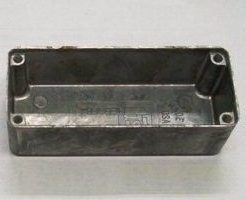
A380 Box
In aluminum die casting, molten metal is injected into hardened steel dies under high pressure. As the aluminum cools, it shrinks slightly and grips the die surfaces. Draft angle creates clearance, allowing ejector pins to push the part out smoothly without distortion.
Die Casting Industry guidelines typically recommend 1 to 2 degrees of draft per side, with two degrees considered a safe standard for most aluminum castings. However, the exact requirement can vary depending on wall thickness, surface finish, alloy selection, and whether slides or lifters are used in the tool.
Despite its importance, draft angle is often overlooked during early design stages, especially when parts are designed by engineers unfamiliar with die casting or adapted from machined or plastic components.
Die Casting Part Prices
Impact on Die Casting Part Dimensions
Draft angle directly affects part geometry. For box-shaped enclosures—common in electronics, automotive, and industrial applications—the internal and external dimensions change from top to bottom. A box that measures four inches wide at the opening may be significantly smaller at the bottom once draft is applied.
“If a customer designs a box to fit electronics tightly without accounting for draft, the components may not fit,” explained a die casting project manager. “That usually means redesigning the part or modifying the tool, both of which add time and cost.”
Cost and Quality Implications
From a business perspective, proper draft angle improves more than manufacturability. Adequate draft reduces tool maintenance, increases die life, improves surface finish, and stabilizes production rates. Conversely, insufficient draft can lead to scrap, flashing, or galling inside the die.
As manufacturers face tighter margins and shorter lead times, avoiding preventable tooling changes has become increasingly important.
A Growing Focus on Design for Manufacturing (DFM)
The renewed focus on draft angle reflects a broader industry trend toward die casting design for manufacturing (DFM). Many die casting companies now review customer designs early in the quoting process, flagging draft issues before tooling begins.
“With today’s complex parts and higher expectations, you can’t afford to treat draft as an afterthought,” said the engineer. “It has to be designed in from the start.”
As die casting continues to serve industries ranging from aerospace companies, electric vehicles to renewable energy, understanding fundamentals like draft angle in die casting parts remains essential. Sometimes, the smallest angles make the biggest difference.
|
Kinetic Die Casting Company, Inc. 6918 Beck Avenue, North Hollywood, California USA 91605 E-mail sales@kineticdiecasting.com (818) 982-9200 California Die Castings – Die Casting Photos – Technical FAQ – Die Casting Prices – Kinetic Die Casting Company What is Die Casting ? – Why Use Die Casting – Kinetic Abilities – Die Casting Offshore ? – Sand casting prices and die castings – Die Casting Tooling – Kinetic Newsletter |
If you no longer wish to receive these emails, you may unsubscribe here.
