August 19, 2017 Los Angeles Police Department Mission Division Car Show and Open House, location is at 11121 Sepulveda Blvd. Mission Hills CA 91345. The event time is from 9:00 AM to 2:00 PM. LAPD Specialized police units will display …
Continue reading
Tag Archives: #DraftAngle
Why Draft Angle Is Important for Die Casting Manufacturers
A small die casting design detail requires attention for its outsized impact on quality, cost, and production efficiency: the draft angle in die casting parts.
Die casting draft angle refers to the slight taper applied to vertical surfaces of a die cast part, allowing it to be released cleanly from the steel die after solidification. While the concept has been standard practice for decades, industry experts say misunderstandings about draft angle continue to cause delays, redesigns, and unexpected tooling costs—particularly as demand rises for complex aluminum enclosures and precision components.
“Draft angle is not optional in die casting parts,” said one tooling engineer at a California aluminum die casting facility. “If the walls are straight with no taper, the part will stick in the die. That leads to damaged castings, excessive wear on tooling, and production downtime.”
Why Die Casting Part Draft Angle Matters
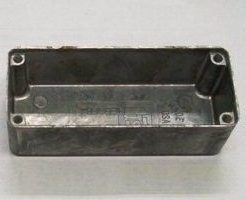
A380 Box
In aluminum die casting, molten metal is injected into hardened steel dies under high pressure. As the aluminum cools, it shrinks slightly and grips the die surfaces. Draft angle creates clearance, allowing ejector pins to push the part out smoothly without distortion.
Die Casting Industry guidelines typically recommend 1 to 2 degrees of draft per side, with two degrees considered a safe standard for most aluminum castings. However, the exact requirement can vary depending on wall thickness, surface finish, alloy selection, and whether slides or lifters are used in the tool.
Despite its importance, draft angle is often overlooked during early design stages, especially when parts are designed by engineers unfamiliar with die casting or adapted from machined or plastic components.

Die Casting Part Prices
Impact on Die Casting Part Dimensions
Draft angle directly affects part geometry. For box-shaped enclosures—common in electronics, automotive, and industrial applications—the internal and external dimensions change from top to bottom. A box that measures four inches wide at the opening may be significantly smaller at the bottom once draft is applied.
“If a customer designs a box to fit electronics tightly without accounting for draft, the components may not fit,” explained a die casting project manager. “That usually means redesigning the part or modifying the tool, both of which add time and cost.”
Cost and Quality Implications
From a business perspective, proper draft angle improves more than manufacturability. Adequate draft reduces tool maintenance, increases die life, improves surface finish, and stabilizes production rates. Conversely, insufficient draft can lead to scrap, flashing, or galling inside the die.
As manufacturers face tighter margins and shorter lead times, avoiding preventable tooling changes has become increasingly important.
A Growing Focus on Design for Manufacturing (DFM)
The renewed focus on draft angle reflects a broader industry trend toward die casting design for manufacturing (DFM). Many die casting companies now review customer designs early in the quoting process, flagging draft issues before tooling begins.
“With today’s complex parts and higher expectations, you can’t afford to treat draft as an afterthought,” said the engineer. “It has to be designed in from the start.”
As die casting continues to serve industries ranging from aerospace companies, electric vehicles to renewable energy, understanding fundamentals like draft angle in die casting parts remains essential. Sometimes, the smallest angles make the biggest difference.
|
Kinetic Die Casting Company, Inc. 6918 Beck Avenue, North Hollywood, California USA 91605 E-mail sales@kineticdiecasting.com (818) 982-9200 California Die Castings – Die Casting Photos – Technical FAQ – Die Casting Prices – Kinetic Die Casting Company What is Die Casting ? – Why Use Die Casting – Kinetic Abilities – Die Casting Offshore ? – Sand casting prices and die castings – Die Casting Tooling – Kinetic Newsletter |
If you no longer wish to receive these emails, you may unsubscribe here.
The Importance of Die Casting Draft Angles
In die casting, when precision meets efficiency, every detail matters. Among the many factors that contribute to the success of the die casting process, the draft angle stands out as a crucial consideration. Often overlooked but essential, the draft angle plays a pivotal role in ensuring the manufacturability, quality, and integrity of die-cast parts. Let’s delve into the significance of draft angles in die casting and the strategies employed to optimize their impact on the production process.
Understanding Draft Angles in die casting, a draft angle refers to the taper or slope applied to vertical walls or surfaces of a mold cavity. It facilitates the removal of the casting from the mold after the casting process is complete. By incorporating draft angles into the design of die-cast parts, manufacturers can prevent damage to the part and the mold, reduce the likelihood of defects, and ensure smoother ejection during demolding. The primary function of draft angles is to facilitate the ejection of the casting from the mold cavity. Without proper draft angles, the casting may become wedged or stuck within the mold, leading to deformation, surface defects, or even mold damage during the demolding process. By providing a gradual taper to the walls of the mold, draft angles allow for easy and consistent removal of the casting, minimizing the risk of costly rework or production delays. Draft angles also play a crucial role in preventing undercuts, which occur when features of the part prevent it from being extracted straight out of the mold. Without adequate draft angles, undercuts can result in the formation of undesirable features such as flash or distortion on the casting, compromising its dimensional accuracy and surface finish. By incorporating draft angles into the design, engineers can mitigate the risk of undercuts and ensure smooth demolding of the part. Proper draft angles contribute to the overall surface finish of die-cast parts. By allowing for smooth ejection from the mold cavity, draft angles help minimize friction and shear forces that can result in surface imperfections such as scratches, blemishes, or parting lines. Additionally, draft angles promote uniform cooling of the casting, reducing the likelihood of thermal gradients and associated defects, thus enhancing the final surface quality of the part.
While draft angles are primarily functional considerations, they also have implications for the aesthetics of die-cast parts. Careful attention to draft angles can help maintain the visual integrity of the part by minimizing the appearance of parting lines, flash, or other defects. By striking the right balance between functionality and aesthetics, designers can ensure that die-cast parts not only perform optimally but also meet the visual standards expected by customers.
Die Casting Draft Angles are a critical aspect of die casting design, influencing the manufacturability, quality, and aesthetics of die-cast parts. By incorporating proper draft angles into the design process, manufacturers can optimize the die casting process, minimize production issues, and ensure the successful production of high-quality parts. As die casting continues to evolve and innovate, draft angles will remain an essential consideration in achieving precision, efficiency, and excellence in manufacturing.
“The Parts We Make Today, We Ship Today”
Kinetic Die Casting Company. Inc.
6918 Beck Avenue, North Hollywood,
California 91605, United States of America
E-mail sales@kineticdc.com
USA Toll Free: (800) 524-8083 Local: (818) 982-9200
To get prices for Die Casting Parts:
Request Die Casting Part Prices
Kinetic Die Casting Company makes:

NADCA-Product-Standards-for-Die-Casting-pdf
Die Casting Porosity
Die Casting Draft Angle
